
Share Stanley Gartler's obituary with others.
Invite friends and family to read the obituary and add memories.
Stay updated
We'll notify you when service details or new memories are added.
You're now following this obituary
We'll email you when there are updates.
Select your format and elements to print

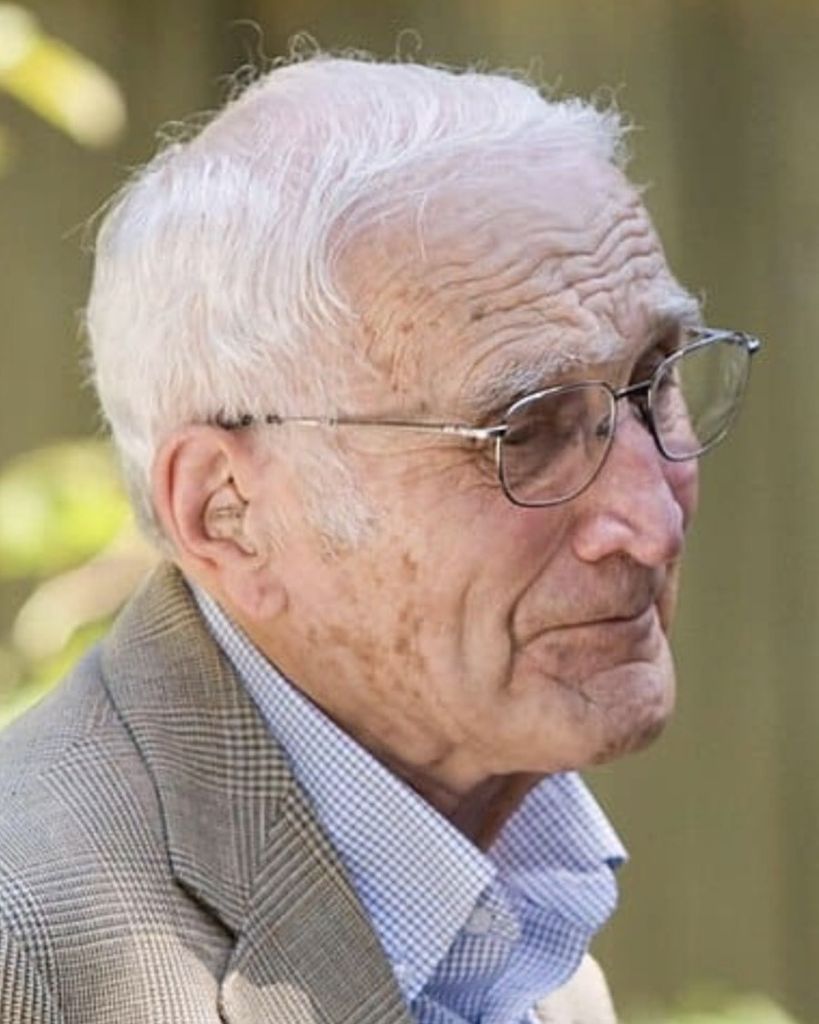
Stanley Gartler
Jun 9, 1923 — May 25, 2026
Stanley (Stan) M. Gartler passed away peacefully in the early hours of Memorial Day, May 25, 2026. He was a couple of weeks shy of his 103rd birthday. For the past few months, he had been slowly losing strength and was ready to be done with the full and rewarding life he had lived. He got his wish. To the end, seeing family, friends and caregivers, elicited a wonderful smile and an appreciative thank you.
Stan was born on June 9, 1923 in Los Angeles, California to George and Delvira (Kupferberg) Gartler, Romanian immigrants. His mother was a housewife and his father owned a dry cleaning plant. While Stan’s father wanted Stan to join him in the dry cleaning business, he had other ideas. He enrolled at UCLA in 1941 but enlisted in the Army Air Force in 1942 as a radio operator and machine gunner. In 1943 he began active duty in the 9th Army Air Force as the waist gunner on a B26 bomber, responsible for the machine guns on each side of the plane, flying missions over France and Germany. He rose to the rank of sergeant, and, when discharged at the end of the war, returned to UCLA where he received his undergraduate degree in agriculture in 1948. While at UCLA, Stan met Marion Mitchelson to whom he would be married for 68 years. In 1952 Stan received his Ph.D. from UC Berkeley in genetics, specifically plant genetics, but while there he became intrigued with human genetics. This led him to further his training as a fellow in human genetics at Columbia University. In 1957, he became Arno Motulsky’s first recruit to the new Division of Medical Genetics in the Medical School at the University of Washington and, in 1960, received a joint appointment in the Genetics Department (now the Department of Genome Sciences) founded the year before by Herschel Roman in the UW College of Arts and Sciences.
Stan’s life had two interconnected themes. On the one hand, he was passionate about family, friends, exploring ideas (sometimes playing the devil’s advocate) and physical activity from hiking to handball, from tennis to golf. On the other hand, he was a brilliant scientist who expanded knowledge by cutting to the essence of a scientific problem. He used his innate people skills to cultivate highly successful collaborations involving basic scientists and clinicians to address a problem. He trained others so they, too, could achieve success in their explorations.
Like his parents and sister, Stan was an avid walker. From the house he and Marion shared, he would take a daily walk. with a succession of beloved Weimaraners, down a windy steep road to the Burke Gilman Trail, from there to Matthews Beach and back home again. By 2020 at age 97, he was having to sit in a chair provided by a friend at the bottom of the road before he could make the trek home. A year later, Stan decided he should leave the house he and Marion had lived in for 59 years, and move to University House, a retirement community with many seniors from the UW. Ever the walker, he switched to walking a mile from University House to Green Lake and back. Even at 101 years old, he continued to make that walk, cane in hand, stopping often to sit on someone’s steps, lean on a fire hydrant, or sit on a wall. Only in the last year did he finally run out of the energy to do that.
Stan loved the outdoors and had a variety of adventures. When hiking in Mexico with family, Stan said the favorite place he had visited with Marion was Machu Picchu. While that trip had been by train, Stan’s revelation prompted family members to invite him, at age 78, to join them in hiking the 4-day rigorous mountain trail to Machu Picchu. Young people would fly past, then invariably stop to enjoy the sights and Stan and family would pass them again and again. After a couple of days, people would stop him and ask if he was Stan. When he nodded they would say, “You are the old guy who is kicking everyone’s ass on this trail!”
Stan and Marion loved to entertain family and friends, their group constantly expanding as they met others. At Thanksgiving and for Passover seder, their house was filled to the max. As Marion began to travel around the world collecting beautiful textiles, turning them into one-of-a-kind reversible vests designed to protect one’s valuables while traveling and traveling again to sell them, Stan became a proficient chef. Among his most memorable dishes were eggplant parmesian, lamb chops with yams, and rhubarb compote. He continued the tradition of entertaining after Marion passed.
Stan was also a gardener. Each year, Marion ordered 1000 tulip bulbs for Stan to plant in their yard, another tradition he maintained after her death. He also enjoyed being surrounded by rhododendrons and a rose garden. At age 95, he was still cleaning the rain gutters on his roof. That practice ended when he fell off the ladder and broke his shoulder.
Stan’s life was filled with scientific curiosity and endeavors. A critical question he addressed with elegance and simplicity was whether a cancer arises from a single renegade cell that is multiplying out of control or a mixture of different cells that are growing out of control. To do so, he harnessed the phenomenon of X-chromosome inactivation, the fact that, in women, any particular cell in the body randomly expresses the genes on only one of its two X chromosomes. He and his colleagues identified cancer patients whose normal cells had two distinguishable copies (A and B) of a gene called glucose-6-phosphate dehydrogenase (G6PD), A on one X-chromosome and B on the other. Due to X-chromosome inactivation, some of the cells in their normal tissue expressed A while others in the same tissue expressed B. In contrast, all of the cells in the tumor tissue expressed only one form of G6PD, for example A. Hence, the tumor arose from a single mutated cell. This seminal finding was extended to other types of tumors and has had a profound impact on the advancement of both diagnosis and treatment of cancer, laying the foundation for the personalized medicine being developed today.
One of his more high profile studies again took advantage of the expression of G6PD to show that many people who thought they were studying cells with a particular origin were actually studying a cervical cancer cell called HeLa, not at all what they had intended. This invalidated their results and, equally importantly, resulted in the establishment of procedures to validate findings by ensuring the identity of the cells under study. This lesson continues to resonate today as all laboratories working with cells need to be vigilant to ensure that cells with a growth advantage, such as HeLa cells, don’t contaminate and then take over the population. This is akin to invasive weeds over growing a native plant.
Stan’s scientific honors include being elected to the National Academy of Sciences in 1989 and the 2016 Victor McKusick Leadership Award. In addition, he was elected to serve as the 1987 President of the American Society of Human Genetics (ASHG). Tributes, discussions of the impact of Stan’s research and examples of his interactions with colleagues as well as Stan’s Victor McKusick acceptance speech and the transcript of a class at Washington State University in which Stan discussed The Immortal Life of Henrietta Lacks can be found here: https://drive.google.com/drive/folders/1IIgqq167KIVYbSDZLiSwXi0_kvaquMeV. A video of Stan’s discussion at WSU can be found at YouTube under the title Discovery of the “HeLa Bomb” with Stanley Gartler. Also on YouTube is a delightful interview of Stan conducted by Charles Laird that brings Stan to life. It’s title is Dr. Stanley Gartler – October 4, 2011.
Two final points need to be made about Stan and his scientific career. First, while many basic scientists, once they have finished their training and established their laboratories, no longer conduct hands-on research, Stan always loved to be in the lab actively conducting experiments. Second, although required to give up his UW salary when he reached 70, Stan continued working in his own lab without a UW salary until he eventually joined the lab of Marshal Horwitz, a UW colleague, where he conducted research into his mid-90’s.
Stan and Marion were not able to have children but in many ways were supportive parents to their nieces and nephew (Maryna, Annette, Marilyn and Richard) and their grand nieces and nephews (Elijah, Shava, Ozette, Forrest, Aaron and Copavi). Stan will be sorely missed by his family, his colleagues and the myriad of his friends in many different walks of life and parts of the world.
There will be a memorial for Stan in October.
Consider a donation, as requested by the family.


Guestbook
Visits: 91
This site is protected by reCAPTCHA and the
Google Privacy Policy and Terms of Service apply.
Service map data © OpenStreetMap contributors