Share Joan Bjeletich's obituary with others.
Invite friends and family to read the obituary and add memories.
Stay updated
We'll notify you when service details or new memories are added.
You're now following this obituary
We'll email you when there are updates.
Select your format and elements to print

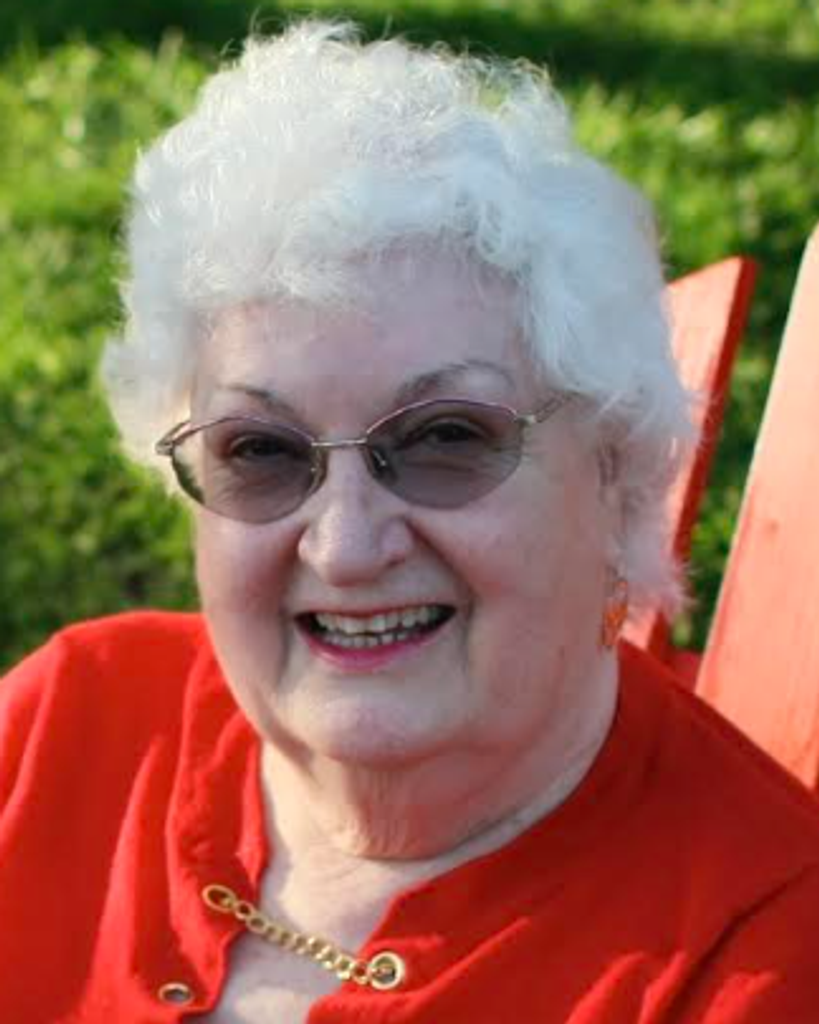


Joan Bjeletich
Dec 30, 1931 — Sep 19, 2026
Joan Frances Bjeletich (née McCarthy) was born December 30, 1931, in Butte, Montana. She spent most of her adult life in Seattle, Washington, where she built an enormous family—not all of whom were technically related to her—and a remarkable life caring for others. Joan died just outside Seattle at the age of 94. She had a long and full life, so get ready for a long and full obituary.
Joan was married to Robert Bjeletich, who preceded her in death. Together they had five children: Sharon Bjeletich, Sheila Bjeletich, Barbara Bjeletich, Caryl Bjeletich, and Rob Bjeletich and his wife, Pandora.
She leaves behind a huge family who loved her dearly, including nine grandchildren and eight great-grandchildren—although Joan would have told you that number was much higher. Any child who entered her house was automatically a grandchild, and they were treated accordingly.
Her grandchildren include Michael Naiman, who preceded her in death; Lina and Josh Trujillo; Aryn Daly and Kim Anderson; Dan Daly; Melina Bjeletic; Caitlin Jackson and Pete Williams; Carly Jackson and Julian Jones; Rico and Sloan King. Her great-grandchildren include Fiona and Justin Daly; Kyler Daly; Paisley Daly; Ravenna Trujillo; Araya Trujillo; Uma Bjeletic Bannier; Zelda King; and Zeppelin King.
All but one of her great-grandchildren—the youngest, born only a few months ago—had the chance to meet her and experience her love.
Joan’s family came from Allihies, County Cork, Ireland, and her Irish pride stayed strong throughout her life. There was never a St. Patrick’s Day without corned beef and cabbage, green charms, a Mr. McCarthy ready to shake your hand, and “When Irish Eyes Are Smiling” or “Danny Boy” belted out. She was born in Butte, Montana, a place that remained dear to her heart until the end.
A Mom of the Ages
Joan was the quintessential ’50s mom—the kind who met the kids at the door, a delicious meal ready, in matching outfits she had sewed for herself and the girls, and of course high heels! Years later, she would fully embrace those wonderfully ugly nursing shoes that gave some relief to her broken arches.
She was the PTA president, the mom who had everyone singing around the piano, and the mom with the rosiest-colored glasses of all. She was the Camp Fire leader, taking the girls to Hamlin Park for day campfires and Miners Stew, which to this day is the favorite camping meal of any descendant of Joan: potatoes, onions, carrots, and beef wrapped in tinfoil and cooked over the coals.
Her kids could do no wrong in her eyes. Even if you burned the trees in the front yard down, even if you took a sledgehammer to the car, even if you ran into the garage, or stole her birth control.There was always an explanation, always a defense, and usually a way that somehow made perfect sense to Joan, especially when it came to Rob, her favorite (and only) son.
Joan was the kind of mom you wanted to stick around, the kind you lived next door to, down the street, or just blocks away.
A Nurse in Every Sense of the Word
Joan was one of the first graduates of Shoreline Community College, where she got her ADN and RN license.
In highschool, Joan had made a pact with her school girlfriends that they would never drink, and she stuck to it. But her first day as a nurse was harrowing. She worked at the US Public Health Service. She transferred radiation patients at a time when radiation treatment was still so new that it was performed in a WWII concrete bunker in West Seattle. Joan spent her days going up and down those concrete stairs, preparing and caring for patients undergoing treatment.
At the end of that first day, her charge nurse pulled Joan into her office, opened a desk drawer, pulled out a bottle, and handed her a shot.
Joan drank it.
It was the first alcoholic drink she had ever had. It was also her last. (That is her story, and we are sticking to it, true or not!)
Apparently, she needed that one.
But that day didn’t dissuade her. Instead, she did what she would continue to do throughout her life: she took even more care of the people around her.
This was before Ronald McDonald Houses and many of the services that now help families stay near children receiving weeks or months of medical treatment. So when Joan had patients whose parents needed somewhere to stay during treatment, she simply brought them home.
They stayed at her house until their treatment was over.
That was Joan.
She never met a stranger in her life—only family members she hadn't met yet. Once you entered her house, you weren't merely welcome. You were expected to stay, expected to eat, and it did not matter in the slightest how recently you had already eaten.
A Nurse and an Innovator
Joan took nursing—and caring for others—to heart. She was also an innovator.
Her professional work placed her alongside Dr. Robert O. Hickman during the early use of the Hickman catheter, a long-term central venous catheter that made it possible for patients to receive extended intravenous treatment.
In 1980, Joan Bjeletich and Robert O. Hickman co-authored “The Hickman Indwelling Catheter” in the American Journal of Nursing. Her work continued to be referenced in nursing education and later medical literature. Publication record
In 1982, Joan authored “Repairing the Hickman Catheter,” also published in the American Journal of Nursing. The publication identified her as Joan Bjeletich, RN, Total Parenteral Nutrition Clinician at Swedish Hospital Medical Center in Seattle. Publication record
But Joan wasn't interested only in developing better ways to care for patients in the hospital. She wanted to figure out how to get them home.
Joan became involved in creating HomeHealthCare, distributing supplies and teaching patients and their families how to manage TPN—total parenteral nutrition—at home. This allowed people who needed long-term intravenous nutrition to receive their care without having to live in a hospital.
And because Joan was Joan, when she needed a better way to teach them, she made one.
She created a training dummy that patients and caregivers could practice on while learning how to manage their care. For years, she told the family the dummy had been molded from her son Rob.
It wasn't. (So he says.)
Her work in home care continued. In 1987, she was among the authors of “Declotting Central Venous Catheters with Urokinase in the Home by Nurse Clinicians,” research focused specifically on providing sophisticated central-line care in patients' homes. PubMed record
The Nurse at the Kitchen Desk
Joan eventually finished her long nursing career with Seattle Children's. She first worked at the hospital and had the pleasure of working side by side with her daughter Barbara. Later, when her own mother, Frances, needed more care, Joan worked from home as an on-call nurse.
Headset on, sitting at her kitchen desk, Joan's calm voice reassured worried parents while the voices of children, grandchildren, and friends streamed through the house around her, and her mother watched Bob Ross paint perfect trees.
She kept doing it until she was 80 years old.
And why did a woman who had spent her career adapting to enormous changes in medicine finally decide it was time to retire?
They changed the computer program.
Again.
At 80, Joan decided she had learned quite enough about computers.
And that was that.
More Hobbies Than a Hobby Lobby
Joan was not a person who got bored. She had more hobbies and traditions than a Hobby Lobby.
For many years she was a proud member of the Red Hat Society and could regularly be spotted in her purple clothes and red hat.
She was also a fierce card player. She looked forward to her weekly card groups (yes, many groups!) for decades. Her favorite game was Canasta, which she “taught” every one of her children and grandchildren to play—using Joan's rules, of course. These rules changed frequently and, strangely enough, always seemed to work in her favor.
Winning quietly was also not Joan's style.
She had the warm family tradition of beating the pants off her opponent, opening the back door, and yelling loudly enough for the entire neighborhood to hear:
“I won! I won! I won! I BEAT ______!”
The blank could contain the name of anyone, including the youngest child she had just mercilessly defeated.
And Joan started them young. If a grandchild wasn't old enough to hold a hand of cards, that wasn't a problem. She would simply get them a little card holder.
Music Was Joan’s Homeland
Joan was fiercely proud of being Irish. Then she married into a Montenegrin family and apparently decided there was room for another homeland too. She became involved in the Yugoslavian Women's organization and played Balkan music for decades. She played in her band Žive Žice (“Live Wires”) for so long it never actually broke up.
They just slowly ran out of living members.
Joan loved music. And she did not sing quietly. She sang at the top of her lungs and put her whole self into the song. She sang at home, she sang in her band, she sang at church, anywhere she could life her voice in song she did.
Joan's Fabrics
Joan was also a quilter extraordinaire.
She made quilts for grandchildren, great-grandchildren, and seemingly every new child she heard about. She quilted so much that the family eventually dubbed her quilting room “JoAn's Fabrics.”
More importantly, she passed her love of quilting on to the generations who came after her. There are pieces of Joan tucked into homes throughout her family—quilts made by her hands that will continue warming the people she loved.
A Seahawks SUPER Fan
And then there were the Seahawks.
Joan was a dedicated—and we mean dedicated—Seattle Seahawks SUPER fan.
She had season tickets and an RV specifically for tailgating at home games. Game days were serious business.
Away games weren't much quieter.
You could hear Joan from blocks away yelling at the television, making sure the players knew when they needed to run faster and letting the referees know exactly how they could improve their calls.
She didn't just watch the Seahawks.
She coached them from Seattle.
Always a Good Sport
Joan would do almost anything for a child or grandchild—and she was always a good sport.
So much so that in 2002, she agreed to let the Seattle Post-Intelligencer send her on a blind date for its Valentine's Day edition, merely because Josh asked her to.
The newspaper described her as a nurse, musician, grandmother and great-grandmother and matched her with Don Olson as part of its Vintage Valentines Project. Read the Seattle P-I story
Even in her seventies, Joan was apparently still up for an adventure.
Blue, Books, and Black Licorice
Joan loved blue.
Not just a little blue.
Blue clothes. Blue walls. Blue carpet. Blue drapes. Blue furniture. Blue flowers.
She also loved black licorice. You could reliably find a stash tucked away in various drawers or candy dishes around the house.
And then there were her books.
Joan loved romance novels—the hot and spicy kind. The kind where you pick one up thinking, Oh, a book, I'll read this, and a few pages later you're blushing and quietly putting it away until later.
She even had a book-of-the-month subscription that seemed to reliably deliver another variation of a handsome shirtless man, probably her favorite—Fabio—on the cover.
Joan had range.
The Best Kind of Friend
Joan was the best kind of friend. Once you were Joan’s friend, you were her friend for life. Her high school best friend, Mitch, became her sister-in-law—the first of many friends who became family.
Donna was another of Joan's best friends and her Seahawks partner. Donna’s granddaughter, Pandora, spent so many hours at Joan’s house she eventually took the whole “friends become family” thing literally by marrying Joan’s son Rob, and making Joan a very happy mother-in-law.
And that was how it often went with Joan. Friends became family—not necessarily the family you were born with, but the family you chose. Once Joan loved you, you were in.
For Joan, there really wasn’t much difference between a good friend and family.
Hazel, Shirley, Nancy, Donna, Mitch, Peggy, Vi…the names of her best friends are too numerous to list.
A Sister—and Summers in Montana
Joan never forgot where she came from or the family she left behind in Montana.
She was the kind of sister who made sure the family returned to Montana every summer, with army tents strapped to the top of the old station wagon, a long train ride to Butte, or her RV, usually bringing along a passel of kids and grandkids. Those trips meant cousins swimming in the lake, running through the fields and most importantly, they meant generations of cousins growing up actually knowing—and loving—one another.
Joan was an amazing aunt and a devoted sister. As everyone grew older, she shared in caring for her mother, and when the trips to Montana became harder, the connection never stopped. There were long phone calls with her brother Larry and her dear sister-in-law Peggy for as long as she was able.
Joan didn't just love her family. She did the work of keeping a family close.
Monday Night at Gramma's
Monday nights meant dinner at Gramma's.
There would be Gramma's salad and something else. What exactly that something else was could occasionally be a mystery and sometimes a little suspicious. But she cooked with the very best ingredient: love.
And really, the food was only part of it.
Joan loved nothing more than a house full of people. The best days had a million kids streaming in and out, family everywhere, food being prepared, and a pig defrosting in the bathtub.
Her home wasn't meant to be quiet.
It was meant to be full. And full meant special, but special was an evening together, maybe watching Michael Flatley as the “Lord of the Dance” or Iron Chef (the Japanese original), leading to the family tradition of cook-offs!
The Kind of Gramma She Was
Joan never missed your birthday or an opportunity to send you a gift.
Would she spell your name correctly?
Maybe.
Would the gift be something you actually wanted?
Unlikely.
Sometimes it was quite possibly the worst gift you could imagine.
But she never forgot you.
She was the kind of grandmother who took you to tea at the Queen Mary and to the Lights of Christmas. She made you watch Dancing with the Stars. She taught you Canasta before you were old enough to hold the cards yourself.
She was also the kind of grandmother who would call you at midnight and say:
“Oh, sorry, were you sleeping? I just got done with band practice.”
Because apparently your grandmother had a more exciting social life than you did.
She was the kind of great-grandmother who picked up her great-grandchildren from preschool on her mobility scooter and called it the Princess Chariot.
She was the kind of Gramma who walked so fast you couldn't keep up with her, but who was also just the right amount of pillowy when you wanted to sit on her lap and read.
She never missed an event. Her door was always open. There was always a place for you to sit.
And yes, she was also the kind of grandmother who might fart as she walked past you.
She was G-Ma.
The original.
Joan Gathered People
If there is a thread that runs through Joan's 94 years, perhaps it is this:
Joan gathered people.
Her door was open.
There was always a place to sit.
There was probably black licorice hidden somewhere.
If you did good you might hear:
“Aren't you just a little soldier for Jesus?”
If she suspected she was being overlooked, you would hear:
“What am I, chopped liver?”
And when Joan was really mad, she might even almost swear or call you a nincompoop!
Joan loved people freely, openly and without reservation.
In Lieu of Flowers
In lieu of flowers, invite someone in for a meal.
Tell someone you love them.
Tell them you're proud of them.
Make room at your table for somebody who needs a place to belong.
Joan was free and open with her love. Share some of your love for her with someone who needs it.
Guestbook
Visits: 7
This site is protected by reCAPTCHA and the
Google Privacy Policy and Terms of Service apply.
Service map data © OpenStreetMap contributors